

JUNE 14, 2026
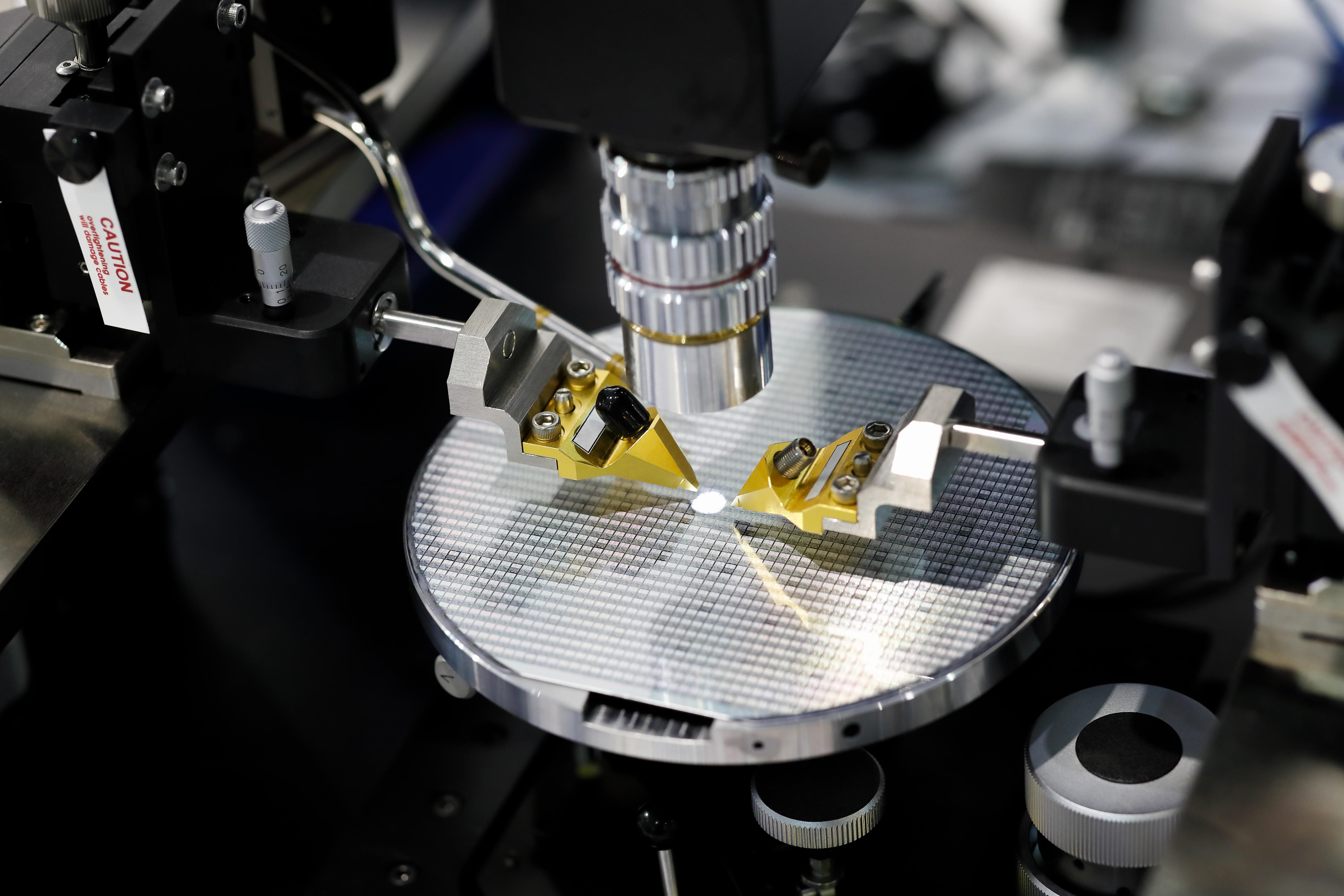
The semiconductor trade has rotated through almost every layer of the stack over the past three years (sometimes back and forth in a virtuous circle). First it was the compute accelerators, with Nvidia turning the H100 and then Blackwell into the most important products in technology. Then it was memory (still going), as the market realized that High Bandwidth Memory was the real bottleneck in AI training and the HBM suppliers got repriced. Then it was optics, as people started paying up and discounting demand that wont show up for a number of years and paying for it into todays’s prices. Then there was power as people started paying attention to the Nvidia 800V architecture shift.
Every one of those themes made money. But underneath all of them sits a layer that almost never gets its own headline, and that quietly takes a cut of every single one. Nvidia cannot ship a GPU, SK Hynix cannot stack an HBM die, and TSMC cannot print a 2nm transistor without first buying tens of billions of dollars of machines from a tiny group of companies that make the equipment that makes the chips.
Consider what the memory makers alone are about to spend. According to an industry report that circulated this month from Jukan, SK Hynix is planning to roughly double its DRAM output, with the core of the plan being:
“raising the monthly DRAM wafer input capacity, currently at the level of 550,000 wafers per month, to around 1 million wafers in 2030.”

That is one company, in one memory type, planning to add the equivalent of an entire second SK Hynix in wafer capacity. The same report notes that Jensen Huang reportedly wrote “Please make more” on a DRAM wafer at Computex. When the most important customer in the world is begging for more supply and the supplier is doubling capacity to deliver it, every wafer of that new capacity has to be filled with deposition tools, etch tools, lithography scanners, metrology systems, and cleaning equipment. The memory super cycle is, mechanically, an equipment super cycle.
It is not just memory, and it is not just polite demand. The urgency has started to show up in pricing. As one well sourced operator put it this week:
“My latest industry checks also indicate that Terafab is offering equipment suppliers prices materially above market rates to secure critical tools, which further corroborates the time pressure.”

Read that again. Buyers are paying above market rates to jump the queue for tools. That is what a genuine supply chokepoint looks like, and it is the kind of pricing power that flows straight to the equipment makers’ margins. This report walks through the twelve names that own that chokepoint, ordered from the largest to the smallest by market value, with enough detail on each to actually be useful.
